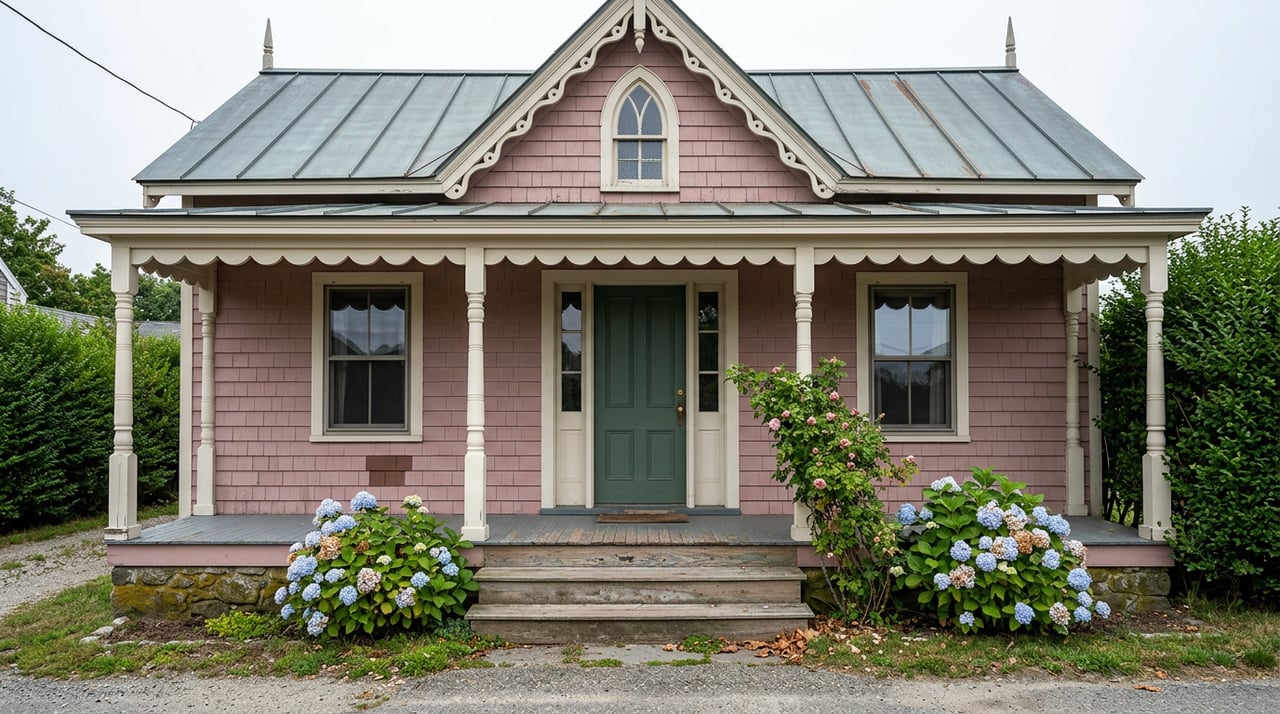
Walk the narrow lanes of Trinity Park on any August evening and it is easy to understand the pull. More than 300 cottages, trimmed in scrollwork and painted in colors no zoning board would ever approve for a subdivision, ring the iron Tabernacle where community sings have carried on for generations. Five minutes downhill, Circuit Avenue is doing what it does every summer night: ice cream lines outside the shops, music drifting from the bars, a table waiting at Nancy's if you don't mind the wait for a lobster roll. It is the kind of place that makes a buyer stop mid-walk and start doing math on their phone.
Here is the part the math usually leaves out. If that cottage sits inside the Martha's Vineyard Camp Meeting Association grounds, known simply as the Campground, you are not buying the land under it. You are buying a wood-frame structure that sits on a lot owned by a private religious nonprofit, and you are applying to join that nonprofit as a leaseholder. The price tag measures the house. It does not measure the relationship you are entering, and that relationship comes with a governance structure, a rulebook, and a documented history of friction that a listing sheet will never mention.
The Land Was Never for Sale
The Campground occupies 34 acres known as Wesleyan Grove, established in the 1800s as a Methodist summer meeting ground and now a National Historic Landmark District. The Martha's Vineyard Camp Meeting Association still owns every square foot of that ground. What changes hands when a cottage sells is the cottage itself and the leasehold interest in the lot beneath it, not a fee-simple deed to the dirt.
That distinction shapes the entire purchase. According to MVCMA's own published process, a buyer who signs an offer must contact the association office, complete a leaseholder application with a $50 fee, submit a CORI background check application and three references, and turn in a copy of the purchase and sales agreement within 30 days of the planned transfer. An interview with the Residential Lease Committee follows. Only after approval does a new lease get generated in the buyer's name, and only after that lease is signed can the buyer occupy the cottage. The sale is then recorded with the Town of Oak Bluffs, but the ownership that matters day to day runs through MVCMA's paperwork, not the registry of deeds alone.
A Lease That Renews, Not a Deed That Lasts
Here is the detail most buyers do not learn until well into the process. Leaseholders must renew their land agreements every year. Miss that renewal and the options narrow to moving the cottage elsewhere or selling it to a buyer the association has already approved. In practice, families have held the same cottage lots across generations, and MVCMA's own board biographies describe that pattern directly: one current board member's grandfather served on the board decades ago while her grandmother tended the memorial garden that supplied flowers for the Tabernacle, and she now holds the family cottage herself. The system works, and has worked for a long time. But it works because MVCMA keeps renewing, not because the buyer holds a permanent, unconditional claim to the ground the way a fee-simple owner elsewhere in Oak Bluffs does.
Who Actually Runs the Campground
A cottage buyer is joining a governed community, and the governance is not democratic in the way a homeowners association typically is. MVCMA's board consists of 21 members, and those members are nominated and elected by the board itself, not by the leaseholders who live under its rules. The bylaws also require a majority of the board to be members in good standing of an established religious organization, a structural feature tied to the association's founding as a religious nonprofit.
That structure was tested publicly in the summer of 2022. A group calling itself the Campground Leaseholders Coalition, representing roughly 70 households, organized to demand a vote in how the association was run, after a Tabernacle renovation project drew lawsuits from the MVCMA board against the town's planning board and zoning board of appeals over the project's scope. At a meeting attended by more than 150 Camp Ground residents, board president Andrew Patch told the crowd plainly that the Campground "is not a democracy." The board did not change its bylaws in response. Under mounting pressure, MVCMA later withdrew both lawsuits, but the underlying governance structure, a self-selecting board that leaseholders do not elect, remained exactly as it was.
This matters to a buyer for a simple reason. If the board later decides on a construction project, a fee increase, or a rule change you disagree with, your vote is not part of the process. You are buying into a community where the rules can move without your input, and 2022 is the most recent documented example of what happens when that friction surfaces.
The Rules Are Still Moving
The association has not stood still since 2022. In April 2026, MVCMA appointed Kim Rielly as its general manager and rolled out a new permitting system for outside tour companies operating in the Campground, a move the association said would let it collect revenue from for-profit tour groups and help cover costs like trash removal, road maintenance, and staffing tied to visitor traffic. It is a small change on its own, but it is evidence of a pattern worth noting before you buy: the association actively adjusts its rules in response to changing conditions, and a buyer signing a lease today is agreeing to whatever version of those rules exists a decade from now, not just the version posted this summer.
What Closing Actually Involves
| Step | What Happens |
|---|---|
| 1 | Sign an offer, then contact the MVCMA office directly |
| 2 | Submit leaseholder application, $50 fee, CORI background check, and three references |
| 3 | Turn in the signed purchase and sales agreement within 30 days of the planned transfer |
| 4 | Interview with the Residential Lease Committee |
| 5 | Approval notice from MVCMA, then closing on the cottage purchase |
| 6 | New lease drafted and signed with the MVCMA General Manager |
| 7 | Sale recorded with the Town of Oak Bluffs |
Build this timeline into your purchase and sales agreement from the start. A closing date that assumes a standard 30 to 45 day process will collide with a lease approval process that has its own committee schedule and its own 30-day application window.
The Calendar You Inherit
If part of the appeal is offsetting ownership costs with rental income, the Campground's rules narrow that plan considerably. Rentals are permitted only between April 1 and November 1, capped at six rental periods and six weeks total across the season, with each rental running a minimum of seven consecutive nights and every guest preregistered at least ten days in advance. That is a workable structure for an owner who wants occasional income around personal use. It is not a structure built for the kind of flexible, high-turnover short-term rental calendar available elsewhere in town.
Peak season brings a second constraint. In July and August, only quiet repair work that does not require an MVCMA or town permit may proceed, and power tools are off limits. If your plan involves buying a cottage in June and having contractors finish a renovation before a September rental, that plan needs to shift. The two months when Oak Bluffs is busiest are the two months when construction inside the Campground effectively stops.
What This Costs, and What It Buys
Town-wide, Oak Bluffs carried a median sale price of roughly $1.23 million over the trailing twelve months as of spring 2026, according to Homes.com data, up about 5 percent year over year. Zillow's home value index for the town sat closer to $1.10 million over the same period, up about 2.6 percent. Active listings that spring ranged from roughly $725,000 to $5 million depending on water access, lot size, and condition. A separate snapshot from Realtor.com in March 2026 showed about 60 active listings townwide, a median list price of $1.75 million, and a median of 74 days on market.
Those figures blend two very different products. On one end sit fee-simple homes and waterfront estates around East Chop and the harbor. On the other sit Campground cottages built between 11 and 16 feet wide with steep gable roofs pitched at 90 degrees, standing one and a half stories tall on land the buyer will never own outright. A median calculated across both tells you less about what a specific cottage is worth than it appears to. The real comparison is not cottage versus townwide median. It is cottage versus what else that same budget buys in Oak Bluffs without a lease, a board, and an annual renewal attached to it.
A Few Questions Worth Asking Before You Offer
Can you get a conventional mortgage on a leasehold cottage? Leasehold mortgages exist. Freddie Mac's own guide requires that the leasehold term run at least five years beyond the mortgage's maturity date unless the fee title vests earlier, along with other conditions on assignability and lender protections. Whether a specific MVCMA lease meets those terms is a conversation for your lender and closing attorney early in the process, not a detail to sort out during underwriting.
Does the board's approval process leave room for surprises? MVCMA has not published detailed criteria beyond the application, references, and CORI check, and the Residential Lease Committee interview is the gate everyone passes through. Build extra time into your contract for this step rather than assuming it will move as fast as a standard financing contingency.
Can I count on year-round living? Many cottages began as canvas tents converted into wooden structures built for a summer season, not four-season comfort. Whether a specific cottage has since been updated for winter use varies property to property, so confirm insulation and heating before you assume it.
A Gingerbread Cottage is a real and rare thing to own on this island, and the families who have held these leases for generations clearly find the tradeoffs worth it. But the tradeoffs are real, and they live in the lease, the board minutes, and the rental calendar, not in the listing photos.
If you are weighing a Campground cottage against something outside it, or you simply want someone who has walked this specific process to review a purchase and sales agreement before you sign one, Anson Realty can help you look past the porch trim to what you are actually agreeing to buy. Request a private consultation and we will walk the lease terms with you line by line.