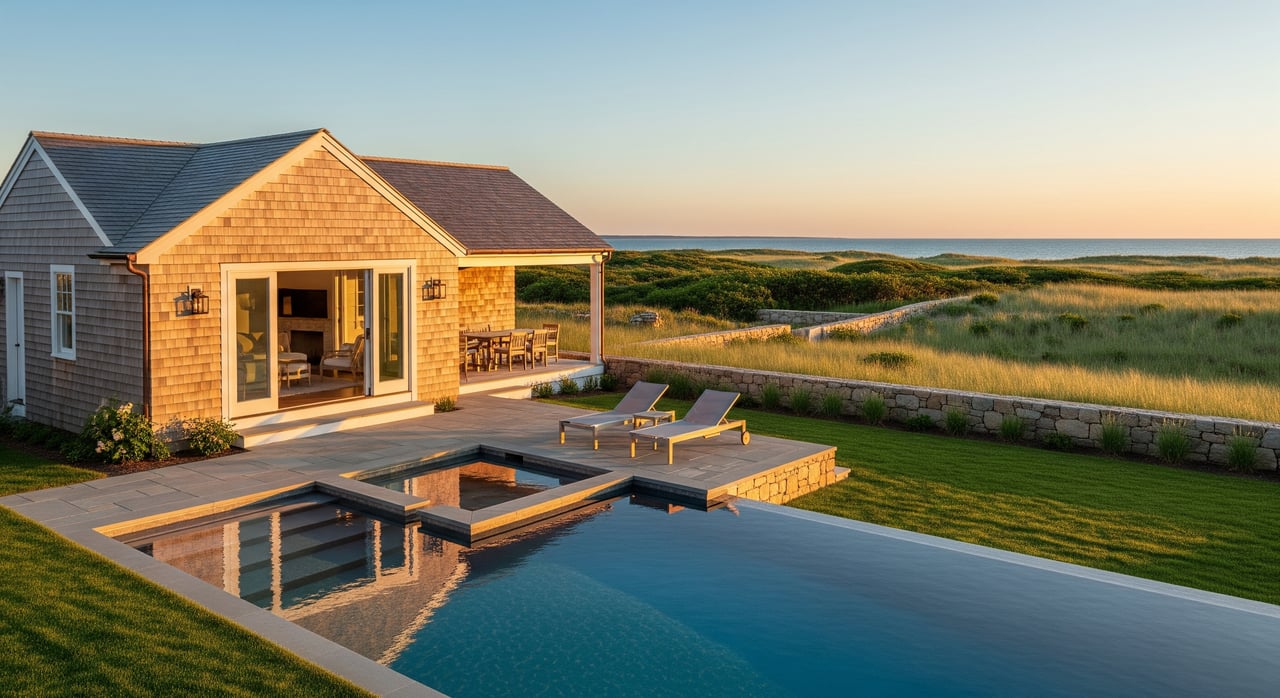
Dreaming of summer afternoons by your own pool in Chilmark, with a quiet guest cottage ready for family and friends? You are not alone. Many owners in 02535 explore these upgrades, then discover the coastal, septic, and permitting details that shape what is possible. This guide gives you a clear roadmap to evaluate feasibility, understand approvals and timelines, and assemble the right team to move from idea to reality. Let’s dive in.
Feasibility in Chilmark 02535
Every parcel in Chilmark is unique. Lot size, setbacks, and lot coverage define where a pool or detached guest house can sit, and conservation or open-space rules may further limit placement. Topography, soils, and existing utilities often drive design and cost. A careful early review helps you avoid redesigns and delays.
Coastal factors add another layer. Wetlands buffers, dunes, and flood zones bring special permits, construction methods, and seasonal timing concerns. In many cases, you can build, but design and siting must respect resource areas and local bylaws.
Site factors to evaluate
Lot, setbacks, and coverage
Start with a current plot plan and your deed. Confirm setbacks, frontage, and any recorded conservation or deed restrictions that limit new structures. Chilmark zoning and special district rules set where and how big you can build, which affects both pool and guest house locations.
Topography and soils
Steep slopes increase excavation, retaining wall needs, and erosion controls. Coastal soils and shallow ledge are common on the Vineyard, which can require special foundations for a guest house and careful excavation for a pool. Plan on professional soil testing and perc testing to inform design and drainage.
Utilities and septic location
Most properties rely on a private well and a Title 5 septic system. The location of the tank and leach field is critical because pools and equipment should not be placed over or too close to septic components. Upgrading electrical service for pumps, heaters, HVAC, and a separate guest space may be necessary.
Vegetation and trees
Mature trees and protected vegetation affect placement and maintenance. Clearing may require permits, and trees near a pool can increase debris and ongoing upkeep.
Septic and water planning
Adding bedrooms or plumbing to a detached guest house often triggers a Title 5 review and may require a septic upgrade or expansion through the Chilmark Board of Health. Even if you label a guest space as “non-bedroom,” increased plumbing fixtures typically count toward flow calculations and may require a new septic design and permitting. Your septic designer will also confirm separation distances between any pool, equipment pads, and the leach field.
Private wells are common up-island. Pools increase seasonal water demand, and a pumping test may be required to confirm well yield. In low-water seasons, filling or refilling a pool might call for scheduling, storage solutions like a cistern, or other mitigation. Confirm electric capacity early if you plan for pool heat, higher-efficiency pumps, or a guest house with modern mechanicals.
Coastal and environmental rules
Wetlands and conservation review
Work near wetlands, dunes, and other protected resource areas usually falls under the Massachusetts Wetlands Protection Act and Chilmark Conservation Commission rules. Expect to file for an Order of Conditions if work is within jurisdictional buffers. Erosion and sediment controls are typical requirements, and some sites near dune lines or sensitive areas may face strict limits.
Flood zones and building code
FEMA flood maps and local floodplain bylaws influence elevation, foundation type, freeboard, and how utilities are installed. Structures in V-zones or high-velocity coastal areas often need engineered, elevated foundations under the Massachusetts State Building Code’s flood provisions. Pool design in floodplains should avoid worsening flood hazards, and changes to livable area or elevation can affect flood insurance.
Regional and recorded restrictions
On Martha’s Vineyard, larger or more complex projects can trigger review by the Martha’s Vineyard Commission if they meet Development of Regional Impact thresholds. Early screening is wise. Also confirm any conservation restrictions, historic rules, or deed limitations before you invest in design.
Permits and timelines
Your project will likely involve several local approvals and inspections. Typical authorities include the Chilmark Building Department, the Board of Health, and the Conservation Commission. Electrical, plumbing, and gas inspections occur later, and state agencies may be involved if work affects state resource areas. The Martha’s Vineyard Commission may review projects that meet its thresholds.
Here is the typical sequence and time ranges:
- Pre-design due diligence (survey, soil/perc tests, title review): 2–8 weeks.
- Design and engineering (site, septic, architectural, structural): 4–12 weeks.
- Local permitting with public hearings as needed: 1–6 months.
- Utility upgrades (well pump tests, electrical service): 2–8 weeks.
- Septic upgrade/installation: 2–6 months, season and contractor availability dependent.
- In-ground pool construction: typically 2–4 months once mobilized, plus delivery and weather factors.
- Guest house construction: typically 6–18 months from permit to occupancy.
- Final inspections and certificate of occupancy: 2–8 weeks.
On-island schedules and seasonal meeting calendars often extend timelines. Many projects take 6–18 months or longer from first survey to final approvals.
Team and early steps
Engage local experts early. A coordinated team prevents design conflicts and avoids rework.
Key professionals:
- Local real estate advisor with Chilmark permitting history.
- Land surveyor for boundaries, topography, and existing conditions.
- Civil engineer/site designer for grading, drainage, and septic siting.
- Septic designer or Title 5 inspector for capacity and Board of Health approvals.
- Architect/building designer experienced with coastal codes and flood provisions.
- Structural or geotechnical engineer for shallow ledge, dunes, or high groundwater.
- Licensed pool contractor with island logistics experience.
- Conservation consultant or environmental planner for filings and hearings.
- Local building inspector for early code interpretation.
- Attorney, if deed or conservation restrictions are involved.
Early-step checklist:
- Pull a current plot plan and deed to confirm setbacks and any recorded restrictions.
- Order soil and perc tests plus a site topo to inform siting and drainage.
- Check FEMA flood maps and local floodplain requirements for your lot.
- Meet the Chilmark Board of Health to confirm how your guest space counts under Title 5.
- Schedule a pre-application chat with Conservation staff to identify buffer issues.
- Ask island contractors about seasonal schedules and material delivery lead times.
Costs, insurance, and rental use
Island projects carry premiums for labor, delivery, and coastal-grade materials. Specialty foundations, flood compliance, and corrosion-resistant equipment increase costs. Pools vary widely in price based on type, site prep, mechanicals, decking, and winterization needs. Detached guest houses vary with foundation type, finish level, and whether septic or well upgrades are required.
Adding living area can influence property taxes and homeowners insurance, and coastal properties often need flood or wind add-ons. If you plan to finance or refinance, lenders typically require compliant septic and a certificate of occupancy. If you intend to rent a guest house, check Chilmark’s rental and health rules before you design.
Maintenance and coastal durability
Salt air and coastal storms accelerate wear on pool equipment and building components. Specify marine-grade or corrosion-resistant materials and plan for storm preparedness. Winterize pools and protect utilities with elevation, anchoring, and access for service.
A step-by-step plan
- Confirm lot constraints with a survey, deed review, and topo.
- Complete soil and perc testing to size and site septic and stormwater.
- Screen flood zones and conservation buffers to set realistic building envelopes.
- Define the program: pool type, guest house size, plumbing count, and mechanicals.
- Engage your architect, site/septic designer, and pool contractor to coordinate layouts.
- Meet with the Board of Health and Conservation Commission staff before filing.
- Submit permits, attend hearings, and schedule utility upgrades.
- Sequence construction with island-season logistics, then close out with inspections.
Work with a trusted local partner
If you own or are buying in Chilmark, having one experienced point of contact simplifies the process. A boutique, concierge partner can coordinate your due diligence, connect you with vetted architects and engineers, anticipate septic and conservation questions, and align the project with your long-term goals, including seasonal rental plans. For thoughtful guidance and discreet coordination from first conversation to final approvals, connect with Susan Anson.
FAQs
Will a detached guest house trigger a septic upgrade in Chilmark?
- Often yes if you add bedrooms or plumbing; the Board of Health typically requires a Title 5 review and may require a new design or capacity increase.
Can a pool be built near my septic leach field?
- Pools and equipment should not be placed over or too close to septic components; maintain safe distances and access as confirmed by your septic designer and the Board of Health.
How long do permits and construction usually take for a pool and guest house?
- Expect 6–18 months or more from early survey to final approvals, considering design, hearings, island seasonality, contractor availability, and inspections.
What if my property is in a FEMA flood zone?
- You may need elevated or engineered foundations, specific utility placements, and flood-resistant construction methods; insurance and design choices can be affected.
Do I need conservation approval to build near wetlands or dunes?
- If within jurisdictional buffers, you will likely need an Order of Conditions from the Conservation Commission; mitigation and erosion controls are common.
Could the Martha’s Vineyard Commission review my project?
- Large or threshold projects may be referred as Developments of Regional Impact; check early to see if your scope triggers MVC review.