One of the best plants at Polly Hill Arboretum nearly ended up under a lawnmower. A volunteer American holly came up as a seedling in the lawn of Polly Hill's brother, and he kept mowing it down. Then he felt sorry for it and moved it into the garden. Polly noticed it bore yellow fruit instead of red, saw it was worth keeping, and named it 'Villanova.'
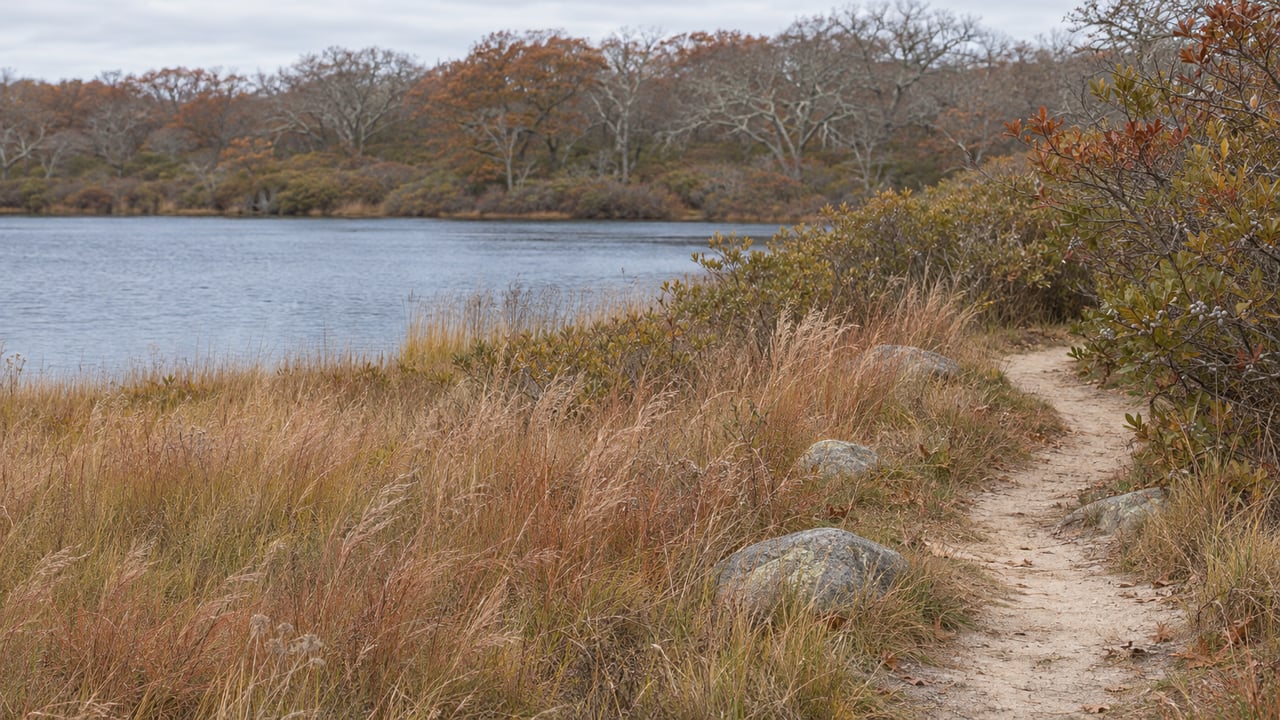
The arboretum describes fruit like that holly's as a great asset in the winter garden, and it is on display now, while the North Tisbury azaleas are months from bloom. Polly Hill started this place by sowing seed and testing plants for herself. The windbreaks, hollies and bark she chose are easiest to pick out in late November, and walking the arboretum on State Road costs half what it did in August.
The Off-Season Terms
The grounds are open every day of the year from sunrise to sunset. From November 1 through April 30, adult admission is $5. From May 1 through October 31 it is $10. Members and children 12 and under are free all year. The Visitor Center is open daily only from mid-May to mid-October, so in winter the self-guided tour materials are at the kiosk in the parking lot. The visitor entrance is at 795 State Road. Pets are not allowed, and bicycles stay in the racks by the lot.
Grounds crews often work on Wednesdays, which can mean noise or a detour around a section of the grounds. A walker who wants the place quiet can pick another day.
The property covers 72 acres, with 25 acres of maintained landscape and 47 acres of woodland with trails open to the public. It was added to the National Register of Historic Places in 2015.
A Farm Planted by Someone Who Learned by Trial and Error
The land's history goes back to 1669. Polly's family bought what was then Barnard's Inn Farm in 1926, and she and her husband, Julian, later inherited it. The idea of an arboretum first came up in 1957, when Polly was 50 and decided to start one by sowing seed. She planted her first seeds in 1958. She was a self-taught horticulturist. She tested plants from across the North Temperate Zone, kept records of how they did, and gave names to the best forms.
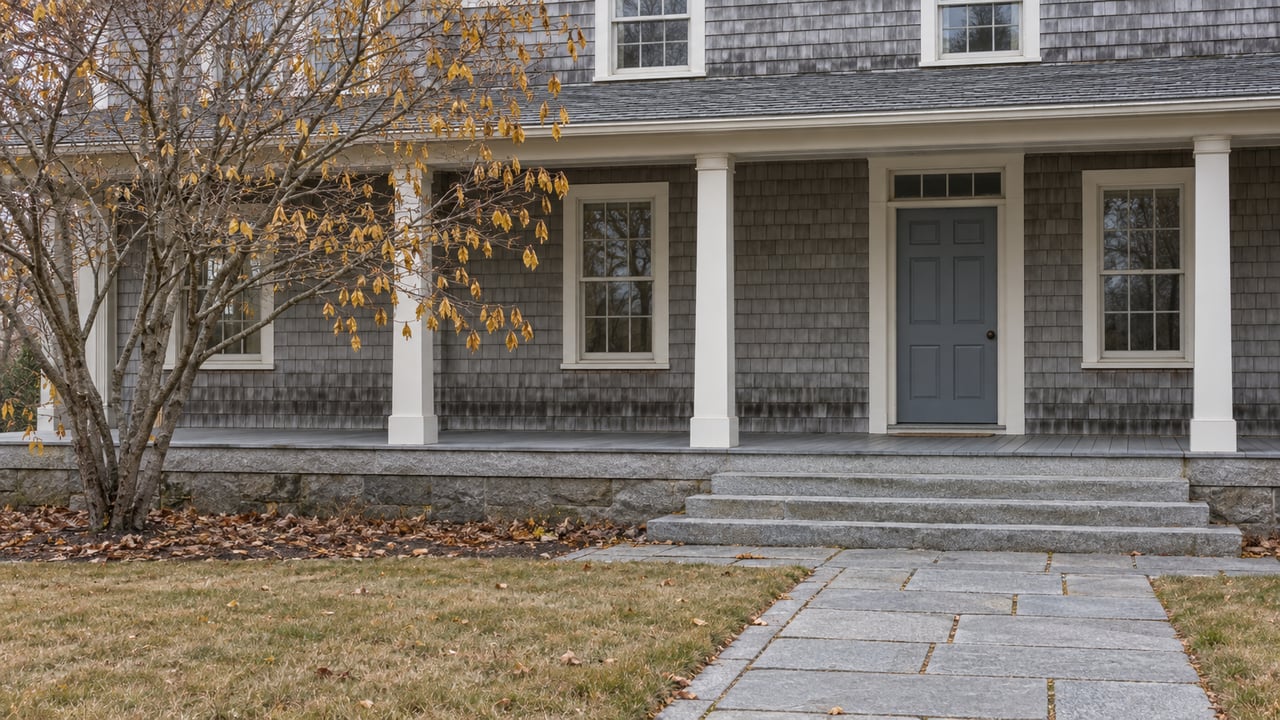
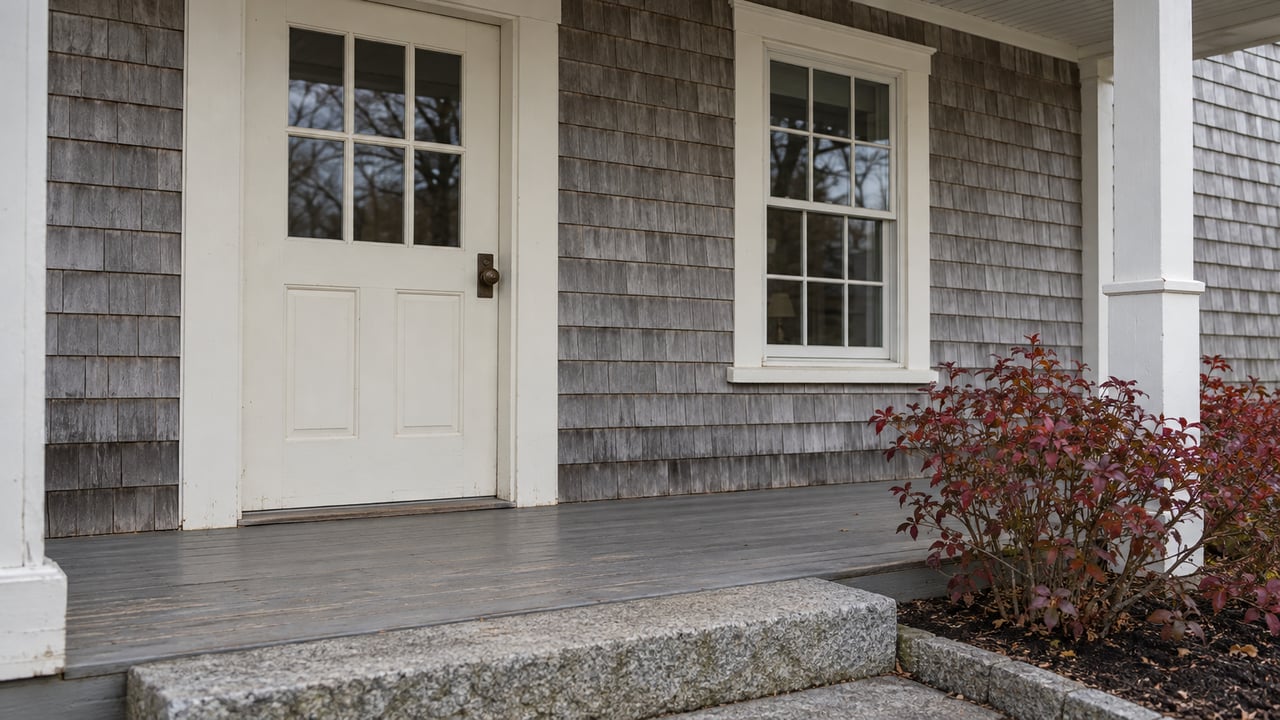
The arboretum's history says it aims to preserve the stone walls and open meadows it inherited from the old farm. The farm buildings are still in use. The Homestead dates to the 1700s and holds the arboretum's offices, with the Homestead Border planted along State Road beside it. The Far Barn is used for lectures and special events. With the help of David H. Smith, the private property opened as a nonprofit public arboretum on June 30, 1998, as The MV Times recounted for its 25th anniversary. Polly Hill died on April 25, 2007, at 100.
Where Her Winter Planning Shows
Start with the Conifer Rows. Polly planted thick rows of conifers alongside the Play Pen as a windbreak for the rare plants inside, and they still do that job. They also make a striking view from across the West Field. The Play Pen is a fenced rectangle, 286 feet long, on the south side of the property. The fence keeps out deer and rabbits. Inside are the North Tisbury azaleas Polly grew from seed sent by her friend Dr. Tsuneshige Rokujo of Japan. They are low-growing and semi-evergreen, and their flowers come from late May into mid-June.
The conifer collection covers 23 genera from five continents. Among the odd ones are monkey puzzle trees from the Andes and the incense cedar, whose wood is used to make pencils. There is also the Chinese dawn redwood, a conifer that drops its needles in fall and was known only from fossils until the 1940s.
The hollies are where Polly's selections matter most in winter. Nearly 100 kinds grow on the grounds. They include all three hollies native to the Vineyard: inkberry, American holly and winterberry. Polly selected several forms of American holly and winterberry for fruit color and foliage. Hollies grow male and female flowers on separate plants, and only a pollinated female bears the bright fruit, so the red and yellow you see are on the female plants. 'Villanova,' the holly from her brother's lawn, has yellow fruit.
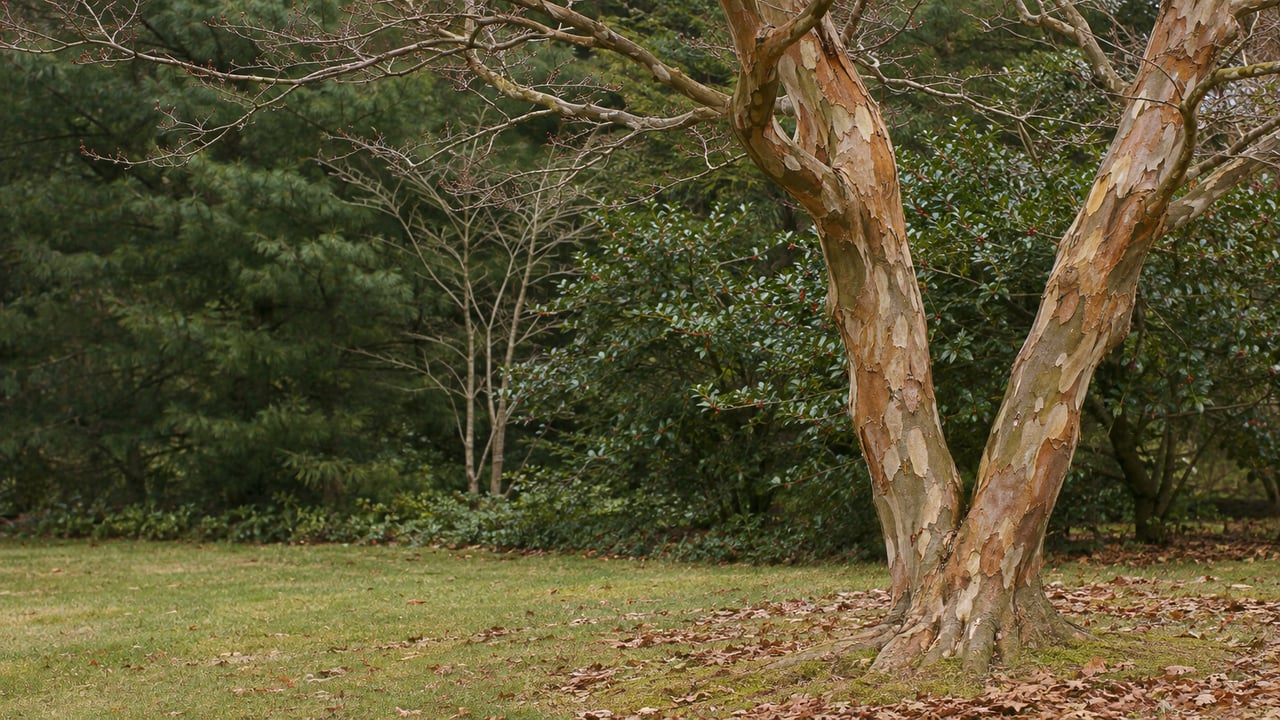
The stewartias have the arboretum's most important credential, and they look very different now than in summer. Polly Hill's Stewartia collection has been accredited by the national Plant Collections Network since 2005, and it includes cultivars Polly selected and named. The arboretum calls them a year-round highlight. Once the leaves have turned red, purple and yellow and fallen, the bark is what you see, in groves and as single trees around the grounds.
Two more stops are worth making in winter. The evergreen rhododendrons keep their leathery leaves all year, and some have a silvery or fawn-colored fuzz on the undersides. The mature plantings in the southwest part of the West Field are easy to see from across the field. The 'Julian Hill' big-leaf magnolia, beside the nursery, was planted in 1961. Polly grew it from seed, chose it because it proved hardy, and named it for her husband. In summer its flowers can reach 18 inches across.
The Dogwood Allée runs 284 feet south from the building called the Gym. It is lined with Kousa dogwoods, some of them Polly's own selections, chosen for their shape, flowers and fruit.
The Pines on the Watch List
Some of this year's work at the arboretum has gone into its pines. The southern pine beetle was first found on the island in 2016. In recent years it has destroyed parts of the Manuel F. Correllus State Forest, West Chop and other areas. In June, the Vineyard Gazette reported that Polly Hill was working to protect its loblolly pines before the beetles reached the grounds. Loblolly is the beetle's favorite food, and the beetles had not arrived as of that report.
The main tool is a verbenone patch about the size of a hand, nailed to the trunk. It gives off a chemical that tells beetles the tree is already full. "It's like a no vacancy sign," Ian Jochems, the arboretum's director of grounds and facilities, told the Gazette. One patch covers a trunk and costs under $10. The crew also waters the pines regularly to keep them healthy. Patches don't work in dense pine groves. The patches have a strong floral scent, so you may notice one on a pine along the paths.
A New Director's First Winter
This is the first winter for the arboretum's new leader. In April the board hired Ian Tucker Peach as executive director, succeeding Timothy M. Boland. Boland came to the arboretum as curator in 2002, became executive director in 2004, and led it for more than 20 years. The staff page now lists Peach as executive director.
Peach lives on Chappaquiddick and knows island land well. Before joining Wilkinson Ecological Design in 2021, he was land superintendent for the Martha's Vineyard Land Bank Commission. There he supervised six full-time staff and 20 seasonal rangers and oversaw a dozen agricultural leases. At Wilkinson he led restoration ecology and large-scale land management projects, including work on Cape Cod and the Islands. When he was hired, he described Polly Hill as a place of "unique and exquisite trees, gardens, acts of science-led plant conservation and legible history." The board's vote to hire him was unanimous, according to the American Public Gardens Association announcement.
December 5 at the Far Barn
The next date on the arboretum's calendar is the free Winter Wreath Celebration on Saturday, December 5, from 3:30 to 5 p.m. Families decorate one large wreath together, it goes up on the Far Barn, and refreshments are served. Arriving earlier in the afternoon leaves time to walk to the Conifer Rows and the hollies before heading to the barn. Details are on the arboretum's calendar.
For more on the town around the arboretum, our West Tisbury neighborhood page and our look at the Ag Hall's off-season calendar pick up where State Road leaves off.
Polly Hill chose some of her plants for how they look in winter. If you'd like to talk through how your West Tisbury property looks and works in November, whether for your own use, for renters or before a sale, Anson Realty would be glad to walk it with you. Request a private consultation.