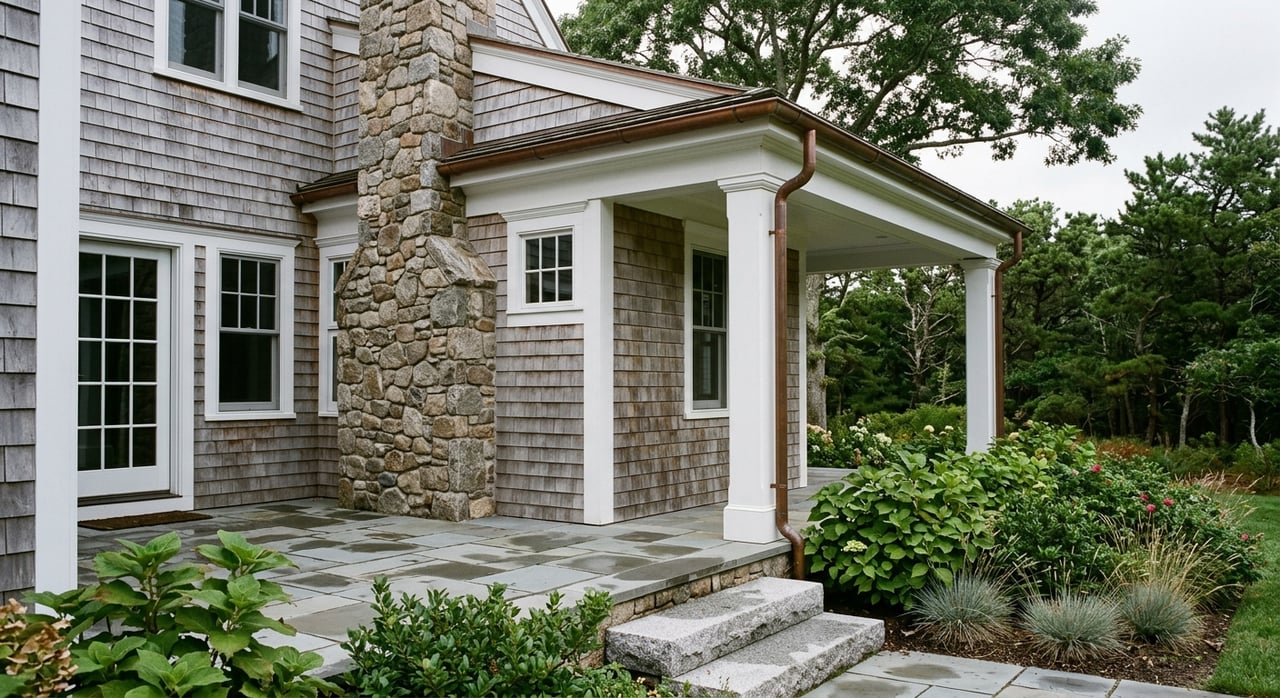
If you have ever wondered why two luxury homes in Chilmark can look similar on paper yet command very different prices, the answer usually comes down to more than square footage and finishes. In this market, buyers often pay for what cannot easily be replicated: privacy, a durable view, usable land, meaningful access, and a property that does not come with major regulatory friction. If you are buying, selling, or evaluating a long-term hold in Chilmark, understanding these value drivers can help you see the market more clearly. Let’s dive in.
Scarcity Sets the Baseline
Chilmark luxury values start with scarcity. The town’s planning framework is designed to preserve open areas, natural features, ponds, forests, shoreline, and vistas, which means development is intentionally limited in many areas.
That matters because raw acreage is not the same as usable acreage. In several Agricultural-Residential districts, 3-acre minimums, 50-foot setbacks, conservation district limits, and Homesite Lot rules can all affect what can actually be built and where.
For that reason, a large parcel does not automatically deserve a premium. What buyers usually value most is a parcel with a workable building envelope, practical siting options, and fewer land-use constraints.
The broader Martha’s Vineyard housing picture reinforces this. The Martha’s Vineyard Commission reported that only 40% of the housing inventory was available for year-round occupancy in 2024, and the islandwide median home price reached $1.5 million, which supports premium pricing for the most functional and flexible parcels in Chilmark.
Privacy Carries Real Value
In Chilmark, privacy is not just a lifestyle feature. It is often built into the land-use pattern itself. Large-lot zoning, open-space goals, and conservation oversight all support a setting where separation and buffering are part of the appeal.
That is one reason secluded homes often outperform similarly sized properties in more exposed settings. A home that feels protected from nearby visibility can offer a kind of rarity that buyers recognize immediately.
For sellers, this also shapes how a property should be positioned. Privacy is not simply about distance from the road. It is about how the house sits on the land, what surrounds it, and whether that sense of retreat is likely to last.
Views Matter Most When They Last
A beautiful view can add significant value in any coastal market, but in Chilmark, the most important question is whether the view feels durable. Because the town’s preservation framework aims to protect vistas and shoreline character, buyers often place more value on long view corridors that are less likely to be interrupted.
This is why two homes with “water views” can trade very differently. One may offer a broader, more lasting outlook, while another may have a view that is narrower, more seasonal, or more vulnerable to change.
When you compare luxury properties here, it helps to look beyond listing language. The stronger premium usually goes to a view that feels protected by the surrounding land pattern and review environment, not just visually appealing on the day of a showing.
Access Is More Valuable Than Proximity
In Chilmark, water proximity alone does not tell the full story. Access rights can matter more than being near the shoreline, especially when buyers are comparing properties in the same general area.
The town’s beach program uses seasonal stickers and walk-on passes for Lucy Vincent and Squibnocket, and town rules state that residents, guests, and tenants cannot go beyond the gate without valid access credentials. Menemsha Beach is public, which creates a different access profile.
That means a home near the water may not deliver the same experience as a home with clearer or more direct access advantages. In many luxury comparisons, deeded access or a more meaningful right of use can carry more value than simple closeness to the coast.
Usable Land Beats Deeded Acreage
One of the most common mistakes in luxury pricing is assuming that more acreage always means more value. In Chilmark, that is often not the case.
The Conservation Commission oversees wetlands, coastal banks, beaches, tidal flats, streams, and conservation restrictions. If those features limit where improvements can go, the market may discount land that looks impressive on a deed but offers fewer practical options in use.
This is why sophisticated buyers study the building envelope, not just the lot size. A parcel that supports a comfortable homesite, outdoor living, and future flexibility may outperform a larger parcel with tighter constraints.
Architecture Influences Approval Risk
In many markets, architecture is mostly a matter of taste. In Chilmark, it also intersects with review and approval.
The Site Review Committee reviews building, demolition, and reconstruction in certain districts and overlay areas, and it can refer projects to the Historical Commission and other boards. Town materials also show that height relief for some older homes may depend on consistency with architectural style, while site-review agendas reflect scrutiny of projects involving historically documented dwellings.
For buyers, that means design choices can affect more than appearance. They can influence project timing, approval complexity, and the ease of making future changes.
For sellers, architectural fit can strengthen marketability because it signals that a home belongs comfortably on the land and within the local review context. In a town where siting and visual impact receive attention, a well-resolved house often feels more valuable than one that may invite questions later.
Rental Flexibility Can Support Value
For some luxury owners, seasonal income is part of the ownership strategy. In Chilmark and across Martha’s Vineyard, that potential can support value, but only when the use is legal and realistic.
Massachusetts requires short-term rentals of 31 days or less to register and pay the room occupancy excise tax, and the state notes that local governments have authority to regulate short-term rentals. The Martha’s Vineyard Commission also reports 3,999 short-term rentals islandwide and ties housing pressure in part to demand for second homes and luxury vacation rentals.
Chilmark’s 2025 Lease to Locals program, which offers up to $12,000 to convert short-term-rental or mostly vacant units into year-round rentals, highlights how constrained the year-round market remains. That makes rental flexibility meaningful, but not every property will support the same rental strategy.
The strongest premium tends to appear when a home can generate dependable seasonal income without major legal, operational, or use-related drawbacks. For owners who want both personal enjoyment and income potential, that flexibility can be a major part of the property’s appeal.
How Buyers Should Compare Similar Homes
When two luxury listings seem close in asking price, it helps to compare the factors that actually drive long-term value in Chilmark.
Look at the building envelope
Focus on what can be used and improved, not just what is included in the legal description. A smaller but more functional parcel may have stronger value than a larger constrained one.
Study the view corridor
Ask whether the view feels broad, lasting, and supported by the surrounding land pattern. A premium view is usually one that holds up over time.
Clarify access rights
Do not assume beach proximity equals beach use. The difference between deeded access, permit-based access, and nearby public access can be significant.
Check for review layers
Wetlands, conservation restrictions, roadside districts, and historic review can all influence future plans. Even if you are buying a finished home, those factors may affect resale and renovation potential.
Evaluate rental use honestly
If rental income is part of your plan, confirm whether the current legal and use structure supports it. Income potential is strongest when the path to operation is straightforward.
What Sellers Should Emphasize
If you are preparing to sell a luxury home in Chilmark, the highest-value story is often more nuanced than size, bedroom count, or finish level. Buyers here pay close attention to the features that are hard to recreate.
That may include a particularly usable homesite, stronger privacy, a more protected view corridor, cleaner access rights, or a home whose architecture fits comfortably within the town’s review environment. These details can separate your property from another home that appears similar online.
This is also where local presentation matters. A well-positioned listing should explain not only what the property is, but why its combination of land, setting, access, and flexibility is unusually difficult to replace in Chilmark.
Why Chilmark Values Hold Their Character
Luxury value in Chilmark is shaped by a framework that protects land, limits intensity, and preserves the qualities buyers come to the town for in the first place. That is why the market often rewards restraint, privacy, and long-term durability over sheer scale.
In practical terms, the most valuable properties tend to be the ones where several advantages align at once: scarce usable land, a quiet setting, a lasting view, meaningful access, architectural compatibility, and sensible rental flexibility. When those pieces come together, buyers are often willing to pay a premium.
If you want help interpreting how these factors affect a specific Chilmark property, or you are preparing a home for sale or seasonal income, Susan Anson offers private, owner-led guidance tailored to Martha’s Vineyard’s luxury market.
FAQs
What drives luxury home values in Chilmark most?
- The strongest drivers are usually scarcity of usable land, privacy, durable views, meaningful access rights, architectural fit, and the level of regulatory constraint attached to the property.
Does more acreage always increase luxury value in Chilmark?
- No. Acreage adds the most value when it is usable, buildable, and not heavily limited by wetlands, conservation restrictions, or other siting constraints.
Does being near the beach guarantee a higher price in Chilmark?
- No. In many cases, actual access rights matter more than proximity, especially when comparing deeded access, permit-based access, and public beach access.
Can rental income increase a luxury home’s value in Chilmark?
- Yes, sometimes. The premium is usually strongest when the property can support legal, realistic seasonal rental use without major operational or regulatory complications.
Why do similar luxury homes in Chilmark sell for different prices?
- Homes that look similar on paper can vary widely in value because of differences in usable land, privacy, view durability, access rights, review complexity, and rental flexibility.