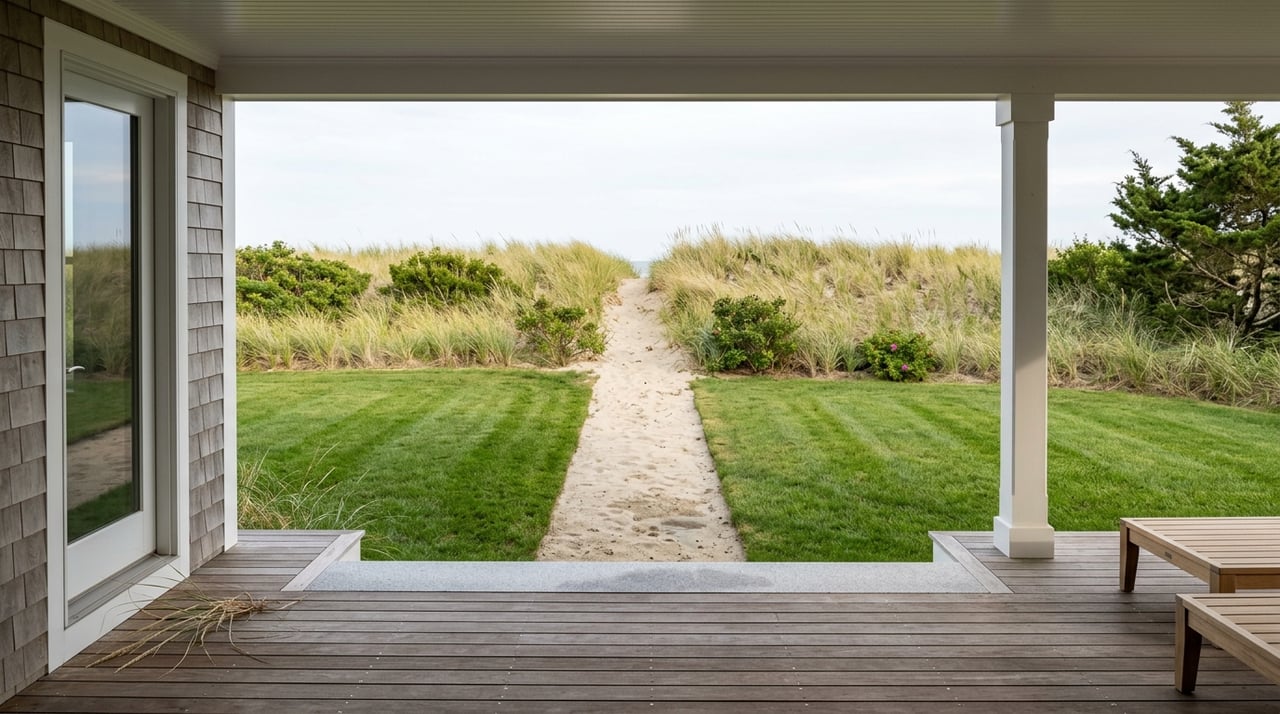
Waterfront in Edgartown is not one single lifestyle. One property may put you steps from the ferry, moorings, and village activity, while another gives you a quieter bay edge or a far more remote coastal setting. If you are thinking about a retreat in Edgartown, the smartest question is not simply whether a home is on the water, but what kind of waterfront life you want to live every day. This guide will help you compare the main waterfront settings in 02539 so you can focus your search with more clarity and confidence. Let’s dive in.
Start With Your Waterfront Lifestyle
Edgartown’s waterfront stretches across very different environments, from the active harbor to the sheltered waters of Katama Bay to the outer shoreline and Chappaquiddick. The town’s 2025 Municipal Harbor Plan covers about 2,046 acres and includes inner and outer Edgartown Harbor, Katama Bay, Eel Pond, Cape Pogue Bay, and Chappaquiddick.
That matters because each area supports a different rhythm of use. The town’s planning framework balances boating, public access, coastal resource protection, and climate resilience, so your decision should consider not only views and privacy, but also access, rules, and how the water behaves season to season.
Harbor Waterfront: Boat-and-Town Life
The harbor edge is Edgartown’s most active and infrastructure-rich waterfront. According to the current harbor plan, the inner harbor includes the historic waterfront village, the Edgartown Lighthouse, the Chappaquiddick Ferry, Edgartown Marine, the Edgartown Yacht Club, more than 900 moorings, 75 boat slips, a marina, four haul-and-launch businesses, commercial fishing boats, and two ferry services.
If you want a retreat where you can move easily between your home, the dock, and the village, this is the strongest fit. The harbor offers the most polished and connected waterfront experience in town, with boating activity and public waterfront use shaping the feel of daily life.
What Harbor Buyers Should Expect
The harbor is less about seclusion and more about access and atmosphere. You are buying into a setting with visible marine activity, established infrastructure, and a close relationship to the village streetscape.
For many buyers, that is exactly the appeal. You get water views, boating energy, and one of the most recognizable settings in Edgartown, all within a historic waterfront environment.
Harbor Home Style and Review
The harbor and village waterfront sit within Edgartown’s historic district. Buildings in this area range from Early English and Colonial to Georgian, Federal, Greek Revival, Gothic Revival, Victorian, Queen Anne, and some Ranch styles.
Exterior work visible from public ways, including the harbor, is reviewed for compatibility with the building, the street, and the harbor-visible setting. In practical terms, waterfront ownership here is shaped by both aesthetics and regulation, not just by the shoreline itself.
Katama Bay: Quiet Water and Privacy
Katama Bay offers a different waterfront experience. The Martha’s Vineyard Commission describes it as a 1,695-acre coastal pond with an average depth of 9.8 feet, strong current circulation, good transparency and dissolved oxygen, and active productivity for oyster culture, quahogs, soft-shelled clams, and some bay scallops.
This area often appeals to buyers who want a more private and less promenade-like setting than the harbor. The Edgartown side of Katama Bay has been described in town planning materials as primarily private residential, while parts of the Chappaquiddick side include fragile shoreline and conservation land.
Why Katama Bay Feels Different
Katama Bay separates the main island from Chappaquiddick, and its water conditions shape how the area lives. It is quieter, more open, and generally less centered on public foot traffic than the harbor.
That quieter character can be a major advantage if you are looking for a seasonal retreat with water views and small-boat use, but without the constant motion of village waterfront activity. It feels more tucked away, even though it remains closely tied to Edgartown.
Katama Home Character
Katama generally reads as lower-density and more open than the harbor. Island-wide community character guidance from the Martha’s Vineyard Commission notes that new construction often follows traditional local forms with simple building volumes, steeply sloping roofs, and white siding or cedar shingles.
That is not a Katama-only rule, but it is a helpful way to understand the visual language many buyers associate with this part of the market. The result is often a waterfront setting that feels refined, understated, and closely tied to the landscape.
Chappaquiddick and the Outer Shoreline
If your idea of a retreat leans toward privacy, surf, fishing, and a stronger sense of distance from town, the outer shoreline may be the most compelling option. This is the most exposed and changeable part of the Edgartown waterfront.
On Chappaquiddick, Cape Poge is an eight-mile barrier beach extending from Wasque Point to the Gut. The area includes barrier-beach habitat, marshes, shore-fishing access, and powerful currents that flush Cape Poge Bay.
The Trade-Off: Privacy Versus Convenience
The outer shoreline offers a legacy coastal feel, but it comes with real access considerations. Chappaquiddick has been cut off from mainland Martha’s Vineyard since the 2007 Norton Point breach, and access is by ferry.
The Trustees notes that summer vehicle ferry lines may exceed an hour. Town parks also note that access to places such as Norton Point and South Beach can be limited or closed temporarily because of nesting birds, weather, and washovers.
What Daily Life Feels Like Here
This part of Edgartown is less about a formal waterfront streetscape and more about the natural setting. Much of the remaining shoreline is quiet residential or conservation land without strolling access.
That makes it especially attractive if you want a retreat defined by changing beach conditions, wide coastal views, and a more remote rhythm. For the right buyer, that remoteness is not a drawback. It is the reason to buy there.
How Tides and Orientation Affect Use
A waterfront purchase in Edgartown is also about how the property functions through the day. NOAA’s Edgartown tide station at Memorial Pier shows a mean tidal range of 2.13 feet, and even that moderate range can affect dock depth, beach width, and the ease of launching or landing small craft.
This is especially important in shallower waterfront settings. What feels usable and easy at one hour can look different a few hours later, particularly if you are focused on boating, beach access, or a protected shoreline.
Harbor Conditions
In the harbor, tides matter for moorings, slips, and shallow edges, but the setting is generally more forgiving because the harbor has the densest boating infrastructure. If convenience on the water is a priority, this is often the easiest environment to live with.
Harbor-facing properties are also fundamentally about views toward the village and visible boating activity. If you enjoy movement, marine traffic, and the social energy of the waterfront, orientation here supports that lifestyle.
Katama Bay Conditions
In Katama Bay, tide and wind tend to matter more because the bay is shallow and currents are strong. This is the setting where low water is most likely to change how a property feels from morning to afternoon.
Bay-facing homes typically deliver a quieter open-water edge. If your idea of luxury includes calm views and a more private waterfront experience, orientation on the bay can be a major part of the appeal.
Outer Shoreline Conditions
On the outer shoreline, the effects of tide, surf, and storms are the most visible. Beach width and access can change quickly, and town beach rules reflect that this is a dynamic coastal resource.
Properties facing this environment offer drama and exposure rather than shelter. If you are drawn to the rawest version of Edgartown waterfront, this is where you feel it most clearly.
A Simple Way to Choose
If you are narrowing your search, it helps to think in terms of daily use rather than labels alone. The clearest distinctions are straightforward.
- Harbor fits buyers who want boat access, village proximity, and a highly active waterfront setting.
- Katama Bay fits buyers who want sheltered water, privacy, and a quieter retreat atmosphere.
- Outer shoreline and Chappaquiddick fit buyers who want remoteness, natural change, surf, and a more rugged coastal experience.
Each option can be exceptional, but they are not interchangeable. The right choice depends on whether you want your retreat to feel connected, sheltered, or wild.
Why Local Guidance Matters
In Edgartown, waterfront ownership is shaped by more than a view. Historic district review, harbor planning priorities, public access considerations, and changing coastal conditions all influence how a property looks, feels, and functions over time.
That is why a highly local search process matters, especially if you are buying from off-island or comparing very different waterfront settings. A clear understanding of micro-location can help you avoid chasing the wrong type of waterfront and focus on the one that truly matches your goals.
Whether you are searching for a harbor home near the village, a quieter Katama Bay property, or a legacy retreat on Chappaquiddick, working with a boutique local advisor can make the process far more focused. To explore Edgartown waterfront opportunities with owner-led guidance tailored to your lifestyle and long-term plans, connect with Susan Anson.
FAQs
What is the best Edgartown waterfront area for boating access?
- The harbor is generally the strongest fit for boating access because it has the densest marine infrastructure, including moorings, slips, a marina, haul-and-launch businesses, and ferry services.
What is the difference between Katama Bay and Edgartown Harbor for a retreat home?
- Katama Bay typically offers a quieter, more private waterfront setting, while Edgartown Harbor is more active, infrastructure-rich, and closely tied to village life.
What should buyers know about Chappaquiddick waterfront access?
- Chappaquiddick is accessed by ferry, and summer vehicle ferry lines may exceed an hour. Beach access can also be limited at times by weather, nesting birds, and washovers.
How do tides affect waterfront homes in Edgartown?
- Edgartown’s mean tidal range is 2.13 feet, which can affect dock depth, beach width, and small-craft use, especially in shallower areas like Katama Bay.
What rules affect exterior changes on Edgartown harbor properties?
- Harbor and village waterfront properties within the historic district may be subject to review for exterior changes visible from public ways, including the harbor-visible setting.
Which Edgartown waterfront setting offers the most privacy?
- The outer shoreline and parts of Chappaquiddick are generally the best fit for buyers who prioritize privacy, a more remote setting, and a stronger connection to the natural coastal landscape.